Trailer Hitches, Brake Controllers and Towing Upgrades for Lifted Trucks
9 min read
The short answer
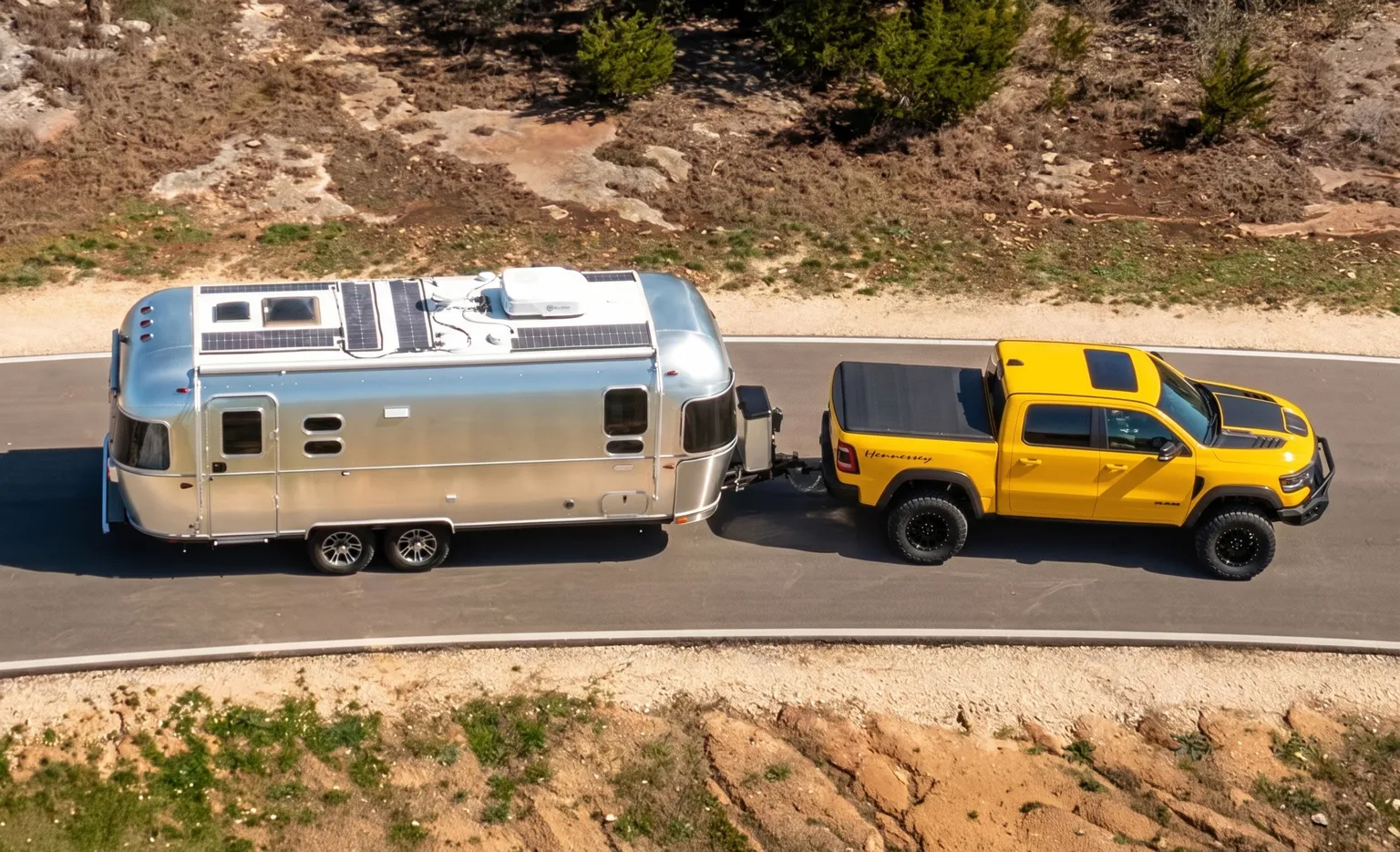
A safe towing setup is a system, and it is only as strong as its weakest part. Start with the hitch and receiver, add a brake controller if your trailer has electric brakes, and then fine-tune how the truck carries the load with bump stops, air bags and weight distribution. Finish with security and convenience items such as hitch locks, wiring and mirrors. On a lifted truck, hitch height, trailer level and suspension behavior under load need extra attention.
This guide is part of our accessories guide. We skip wheels, lift and tires because most Lifted Trucks builds already include them, but lift height changes towing in real ways, and we cover that below.
In this article
Know your numbers first
Every towing accessory works inside limits set by your truck and trailer. Before you buy anything, find these figures on the door jamb sticker, in the owner's manual and on the trailer.
- Towing capacity: the most the truck is rated to pull.
- Payload: the most weight the truck can carry, including passengers, cargo, accessories and tongue weight.
- Tongue weight: the downward force the trailer puts on the hitch. For many conventional trailers, 10 to 15 percent of trailer weight is a common target.
- Gross combined weight rating: the limit for truck, trailer and everything in both.
- Hitch and receiver ratings: the lowest-rated part in the system sets your limit.
Payload is the number that surprises people most. Bumpers, racks, tents, passengers and tongue weight all use it up. For more on how towing, tires and axle ratios interact, read our post on the physics of towing with lift kits, tire size and axle ratios.
Trailer hitches
Receiver hitches and classes
Most trucks use a receiver hitch, a square tube mounted to the frame that accepts a ball mount or other towing accessory. Receivers are grouped into classes by capacity, from light-duty to heavy-duty. Match the class to your trailer, and never exceed the lowest rating among the receiver, ball mount, ball and coupler.
Ball mounts, drops and rises
The ball mount sets the height of the trailer ball. Trailers tow best when they sit level, and on a lifted truck that means the ball mount matters a great deal.
- A lifted truck sits higher, so the receiver is higher off the ground. You often need a drop ball mount to bring the ball down to the trailer's coupler height.
- A larger drop can reduce ground clearance and the angle at which the hitch clears obstacles. Ask your installer about the right balance.
- Adjustable ball mounts can help if you tow several trailers at different heights.
Weight distribution hitches
A weight distribution hitch spreads some of the tongue weight across the truck's axles and the trailer's axles. It can help level the truck, improve steering feel and reduce rear sag with heavier travel trailers. Some include sway control. Whether you need one depends on your trailer weight, tongue weight and truck.
Fifth wheel and gooseneck hitches
Heavy trailers such as large RVs, horse trailers and equipment haulers often use a bed-mounted fifth wheel or gooseneck hitch. These carry weight over the rear axle rather than behind it and are usually the choice for the heaviest loads. They require a compatible truck and proper installation in the bed. See our guide to gooseneck vs. bumper-pull horse trailers for how the two styles compare.
Brake controllers
If your trailer has electric brakes, your truck needs a brake controller. The controller sends power to the trailer brakes in proportion to how hard you brake, so the trailer helps stop itself rather than pushing the truck.
Two main types
- Time-delayed controllers apply a set amount of braking after a fixed delay. They are simple and generally lower cost, but the braking is less tailored to the moment.
- Proportional controllers sense how quickly the truck is slowing and apply trailer braking in proportion. Most owners find them smoother and more natural.
Things to consider
- Factory integration. Many modern trucks have a factory or integrated brake controller option. If yours does, the installer may only need to wire the right connector.
- Mounting location. The controller should be within easy reach and out of the way of knees and controls.
- Setup and tuning. Gain settings need to match the trailer weight. Set it up on a safe, empty road before you tow for real.
- Multiple trailers. Adjust the settings every time you swap trailers or load heavily.
A properly set brake controller is one of the biggest safety upgrades you can make for any trailer with electric brakes.
Suspension upgrades for towing
Towing changes how a truck sits and handles. These upgrades help the suspension manage the load.
Upgraded bump stops
Bump stops limit how far the suspension can compress. Factory bump stops are typically a simple rubber block. Upgraded bump stops, often made of progressive-rate foam or polyurethane, slow compression gradually as the suspension nears the end of its travel.
What they do for towing:
- Reduce harsh bottoming out when a heavy tongue weight or a bump compresses the rear suspension.
- Help protect shocks, springs and the frame from hard impacts.
- Add a more controlled feel when the truck is loaded.
Things to consider: Bump stops manage the end of travel, not the ride height. They do not raise a sagging rear end. They also interact with lift height, since a lifted truck may need different spacing or stop design. A shop that builds lifted trucks can match them to your suspension.
Air bags and air springs
Air bags, also called air springs or helper springs, mount at the rear suspension and use adjustable air pressure to add support.
What they do for towing:
- Level the truck when a heavy tongue weight makes the rear sag.
- Restore proper headlight aim and steering weight on the front axle.
- Let you adjust support to match the load, then reduce pressure when unloaded.
Things to consider:
- They support the load but do not raise the rating. Air bags do not increase your payload or towing capacity. Stay within your truck's ratings.
- Pressure matters. Follow the maker's pressure range and check it regularly.
- Onboard compressors let you adjust pressure from the cab. Manual fill systems are simpler.
- Fit with lifts. Lifted trucks have different rear suspension geometry, and fitment depends on the lift kit and shocks.
Bump stops versus air bags
They solve different problems and often work well together. Bump stops handle the end of travel. Air bags handle sag and leveling. If your truck squats under a heavy trailer, air bags are usually the better first step. If it bottoms out over bumps, upgraded bump stops help.
Other suspension help
- Heavier-duty springs or leaf packs can raise carrying capacity in some setups.
- Upgraded shocks control body motion and improve stability under load.
- Sway bars and stabilizers help limit body roll when towing in wind or on uneven roads.
Suspension choices on a lifted truck depend on the lift and the rest of the build. See our guide to types of lift kits for how lift choices affect the rest of the build.
Other towing accessories worth having
Hitch locks and coupler locks
- Hitch pin locks secure the pin that holds the ball mount in the receiver, so the mount cannot be pulled out.
- Coupler locks stop someone from hooking up to your trailer and driving away.
- Receiver locks protect an empty receiver or accessory mounted in it.
Locks deter casual theft and cost little compared with the loss of a trailer. Choose weather-resistant locks and keep them lubricated.
Wiring and connectors
Your truck and trailer need a compatible connector for lights, electric brakes and charging. Quality wiring prevents flickering lights and brake faults. On lifted trucks, route wiring away from moving parts and heat.
Safety chains and breakaway systems
Safety chains keep the trailer attached if the hitch fails. A breakaway system applies the trailer's brakes if it separates. Check that chains are rated, cross under the coupler and have enough slack for turns without dragging.
Towing mirrors
Tall, wide trailers block your view. Extendable or clip-on mirrors give you a clear look at the lanes beside and behind the trailer.
Backup cameras and trailer cameras
Cameras help with hitching and backing. A 360-degree camera system or a hitch-view camera makes lining up a coupler on a tall truck much easier. Read more about 360 cameras on lifted trucks.
Tongue weight scales and tire pressure monitors
A tongue weight scale shows whether your load is balanced. Trailer tire pressure monitors alert you to a slow leak before it becomes a blowout.
Wheel chocks, jack stands and a spare
Chocks, a tongue jack and a spare tire for the trailer are basic gear that every towing owner should carry.
How lift height changes towing
Lifted trucks tow well when the setup is right, but a lift changes several things.
- Hitch height. A higher receiver needs a drop ball mount to keep the trailer level. A trailer that tilts up or down affects handling and braking.
- Center of gravity. A taller truck sits higher, so wind and sudden moves have more effect. Good shocks, stabilizers and moderate speeds help.
- Tire size and gearing. Larger tires change the effective gear ratio, which can affect towing performance. Our towing physics post covers this.
- Headlight aim. A loaded rear end tilts headlights upward. Air bags and proper aim keep other drivers comfortable.
- Braking. Heavier tires and a heavier truck need more stopping distance, and a properly tuned brake controller matters even more.
- Steps and access. A tall truck makes hitching and reaching the bed harder. Steps help. See our guide to running boards and side steps.
Sample towing setups
These are examples, not fixed packages.
- The Boat and Camper Owner: class-rated receiver, drop ball mount, proportional brake controller, weight distribution hitch, towing mirrors and a hitch lock.
- The Horse Owner: gooseneck or bumper-pull setup, proportional brake controller, air bags for leveling, safety chains and a trailer camera. See our horse trailer truck guide.
- The Weekend Powersports Hauler: receiver and drop mount, brake controller, bump stops and a coupler lock.
- The Heavy Hauler: fifth wheel or gooseneck hitch, upgraded shocks, air bags, proportional brake controller and tongue weight scale.
Why professional installation matters
Towing accessories are safety equipment. A hitch that is mounted incorrectly, a brake controller that is wired wrong or air bags that are set up poorly can lead to failures when you are carrying a heavy load. On a lifted build, ride height, suspension geometry and weight change the correct approach.
At The Lift Shop, our team installs hitches, brake controllers, bump stops, air bags and towing accessories on lifted trucks, so the parts are matched to your truck, your lift and your trailer. Read more in our post on why professional installation beats DIY, then talk to the team about your towing plans.
Frequently asked questions
Do I need a brake controller?
If your trailer has electric brakes, yes. Many states require brakes on trailers above certain weights, so check your local rules.
What is the difference between a proportional and a time-delayed brake controller?
A time-delayed controller applies a set amount of braking after a delay. A proportional controller senses how quickly the truck slows and brakes the trailer in proportion.
Do air bags increase towing capacity?
No. They help support the load and level the truck, but your rated towing capacity and payload stay the same.
What do upgraded bump stops do?
They slow suspension compression gradually near the end of travel, reducing harsh bottoming out. They do not raise a sagging rear end.
Should I choose bump stops or air bags?
If the rear end squats under a heavy trailer, air bags are usually the better first step. If it bottoms out over bumps, upgraded bump stops help. Many owners use both.
Why do I need a drop hitch on a lifted truck?
A lifted truck's receiver sits higher, and a drop ball mount brings the ball down so the trailer tows level.
Do I need a weight distribution hitch?
It depends on your trailer weight, tongue weight and truck. Heavier travel trailers often benefit.
Are hitch locks worth it?
Yes. They deter casual theft for a small cost. Use a hitch pin lock and a coupler lock.
Can I tow with larger tires and a lift?
Yes, with the right setup. Tire size changes effective gearing, so ask your installer about your build.
Can I get towing accessories installed before my truck ships?
Lifted Trucks offers nationwide shipping, so your build can be completed and delivered to you.
Ready to build your towing setup?
Browse our inventory of trucks and SUVs, or talk to The Lift Shop about the hitch, brake controller and suspension upgrades that fit your lift and your trailer. We ship nationwide.